


 844-937-8679


 844-937-8679
Online doctoral degree programs
An online doctoral degree is your opportunity to stand apart in your field. Become a leader that can drive change and leave an impact. Make the choice to step up. From corporations to your community, your professional doctorate prepares you with leadership skills that empower you to make a difference.
Let's get started
Program finder
Interested in a Doctorate in Nursing Practice?
Learn more about the online doctorate nursing degree.
Doctoral degree program length
The doctoral degree program length can vary by program expectations. Course extensions, research proposals, and research and dissertation can all impact the duration and cost of doctoral studies. That's why our doctoral support team is here to guide you every step of the way. Review your selected program for details.
If you have questions, speak to our dedicated doctoral enrollment representative.

Two dissertation pathways. One rigorous doctoral experience.Â
°®ÎÛ´«Ã½ doctoral students may complete their dissertation through one of two pathways: traditional or applied. Both follow the same curriculum, credit hours, academic rigor, faculty guidance, Institutional Review Board (IRB) requirements and oral defense process. The primary difference is the type of research conducted and how the findings are communicated. Â
How do the dissertation pathways differ?
| Traditional dissertation | Applied dissertation |
|---|---|
|
The study explores problems of knowledge grounded in scholarly literatureÂ
|
The study investigates a defined problem of practice within an organizational or professional setting
|
|
Research investigates problems of knowledge to advance scholarly understanding
|
Research explores problems of practice to generate evidence that informs professional practice and decision-makingÂ
|
|
Research may involve organizations or professional settings, but the problem is not bounded to a single organizational context
|
Research is centered on a defined problem of practice within a specific organizational or professional settingÂ
|
|
Five-chapter dissertation manuscript
|
Applied research report, executive summary and supporting deliverables
|
|
Scholarly and academic audiences
|
Academic or professional audiences
|
Traditional dissertation
Typically appropriate when
The study explores problems of knowledge grounded in scholarly literature
Research focus
Research investigates problems of knowledge to advance scholarly understanding
Study context
Research may involve organizations or professional settings, but the problem is not bounded to a single organizational context
Final deliverable
Five-chapter dissertation manuscript
Primary audience
Scholarly and academic audiences
Applied dissertation
Typically appropriate when
The study investigates a defined problem of practice within an organizational or professional setting
Research focus
Research explores problems of practice to generate evidence that informs professional practice and decision-making
Study context
Research is centered on a defined problem of practice within a specific organizational or professional setting
Final deliverables
Applied research report, executive summary and supporting deliverables
Primary audience
Academic or professional audiencesÂ

This comparison is intended as a general guide. The appropriate pathway depends on your research topic, methodology and the feasibility of your study. Doctoral faculty can help determine which pathway best aligns with your research.Â
The dissertation journey: step by step
Both dissertation pathways follow the same five-phase process for developing and completing doctoral research. The activities and deliverables within each phase vary based on the pathway.
1. Identify the problem
Establish a strong foundation for your research by identifying a meaningful problem of knowledge or practice and start drafting your research plan. Â

Traditional Dissertation
Identify a research problem grounded in scholarly literature and draft your research plan. Â

Applied Dissertation
Identify a defined problem of practice within an organizational or professional setting and draft a research plan aligned with that context.

Faculty guide you as you establish alignment among your research problem, purpose, research questions, study design, conceptual framework and the feasibility of your proposed study.
2. Refine the study
Continue developing your study by refining key research elements, validating alignment and confirming your research is ready to move forward.

Traditional Dissertation
Refine your research problem, purpose statement and research design while strengthening the scholarly foundation for your study within existing literature.Â

Applied Dissertation
Refine your applied research plan while validating organizational alignment, research feasibility and ethical readiness.Â

Faculty guide you as you refine your study and confirm it’s aligned, feasible and ready for the next phase. Â
3. Develop the framework
Strengthen the conceptual foundation for your study by synthesizing research and demonstrating why your research problem matters.

Traditional Dissertation
Develop your literature review and theoretical framework by synthesizing scholarly research related to your research problem.

Applied Dissertation
Develop a concept manuscript that positions your problem of practice within broader professional, disciplinary and systemic contexts.

Both pathways strengthen the conceptual foundation for rigorous doctoral research while preparing you to conduct ethical research through Human Subjects Protection training.
4. Finalize the design
Finalize your research design by preparing your study for ethical review, required approvals and data collection.

Traditional Dissertation
Complete your dissertation proposal, obtain the necessary approvals and prepare your study for IRB review before beginning data collection.

Applied Dissertation
Complete your applied research methods package and prepare your study for IRB review and implementation within the approved research setting.

Working with your dissertation committee, you'll finalize your research design and prepare your study for ethical review and data collection.
5. Analyze & communicate findings
Analyze your findings, communicate your research and complete the final requirements of your doctoral study.Â

Traditional Dissertation
Complete your dissertation manuscript, interpret your findings and defend your research before the dissertation committee.

Applied Dissertation
Complete your applied research report, executive summary and dissemination plan before defending your research and communicating findings to scholarly, professional and organizational audiences.Â

Complete your doctoral journey by demonstrating the quality and impact of your research through a successful oral defense.Â
Dedicated doctoral support
Questions about our dissertation pathways? The College of Doctoral Studies has a dedicated team of enrollment representatives and academic counselors who are ready to answer all your questions.

Support for your doctoral degree
Your success as a doctoral student matters to us. That’s why we provide you with a customized support system that helps you reach your leadership goals with confidence.Â

Doctoral-dedicated graduation team
Receive doctoral-focused support from an enrollment rep and academic advisor who understands your doctoral journey.

Dissertation support
Rely on dissertation support and assistance from our faculty including the Dissertation Chair, University Research Methodologist, and Panel Validator. They are ready to assist you early in your program and throughout the completion of your dissertation.

College of Doctoral Studies resource repository
Explore the Research Hub, a vital source of information, materials, guides, webinars and workshops relevant to your success as a doctoral student.Â

College of Doctoral Studies alumni mentor program
The °®ÎÛ´«Ã½ offers an alumni mentoring program for doctoral students. Speak to an Enrollment Representative for details.Â

College of Doctoral Studies Facebook group
Network with other °®ÎÛ´«Ã½ doctoral students and take the journey together


Why earn your doctorate degree online with us?

Career-focused doctoral education
All our professional doctoral degrees provide career-relevant skills that can be applied to leadership roles in your community or organization.

The Scholar-Practitioner-Leader model
Our unique doctoral model provides you with the guidance necessary to become a Scholar-Practitioner-Leader. By participating in classroom dialogue, researching peer-reviewed sources, and integrating application-based knowledge, you can expand your leadership knowledge and translate classroom learning (scholarship) into effective leadership behaviors (practice).

Transfer credits for doctoral students
You can apply up to 27 doctoral-level credits you’ve earned from accredited institutions toward your professional doctoral degree.

The Doctoral Scholarship
Apply for the opportunity to earn up to $3,000 for new students and alumni pursuing their doctoral degree at °®ÎÛ´«Ã½.

Accreditation that matters
We’ve been accredited by the Higher Learning Commission () for more than 40 years.
Meet your college deans
Our college deans focus on developing a career-relevant curriculum. They bring industry experience to the classroom and lead a faculty of academic professionals with one goal in mind—to help you earn the skills you need to pursue your career.

Hinrich Eylers, PhD
Vice Provost of Doctoral Studies and Academic Operations

Shawn Todd-Boone, EdD
Associate Dean, College of Doctoral Studies

Lilia Santiague, PhD
Associate Dean, College of Doctoral Studies
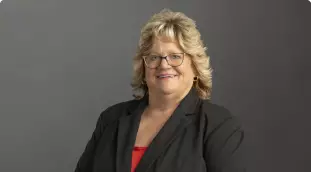
Cathy Lalley, PhD
Associate Dean, College of Doctoral Studies

Herman van Niekerk, PhD
Associate Dean, College of Doctoral Studies
“°®ÎÛ´«Ã½â€¯built my confidence as a professional, and instilled in me a great sense of perspective on how to contribute to the community.â€�
Roxanne M-B.
Master of Health Administration, ’07; Doctor of Management in Organizational Leadership, ‘15

Frequently asked questions about online doctoral degrees
A professional doctorate program gives you career-relevant skills that prepare you to impact and help transform fields like business, management, health administration, education and nursing.
°®ÎÛ´«Ã½ postgraduate programs are all online.
One of the most convenient aspects of the °®ÎÛ´«Ã½ online learning model is that you choose the days and times to participate in class each week. You do need to meet the minimum participation requirements by posting substantive contributions to the classroom on three of seven days each week. While there are due dates for assignments, when you do the work for those assignments is up to you.
The College of Doctoral Studies may accept up to 27 doctoral-level credits, depending on the program, from an accredited institution of higher learning.
At °®ÎÛ´«Ã½, we have doctoral degree programs in business, education, healthcare and nursing. Within these fields, we have four accredited doctoral programs, which include:
- Doctor of Business Administration
- Doctor of Education
- Doctor of Health Administration
- Doctor of Management
The College of Doctoral Studies also offers specific program elective tracks, which place a specific emphasis of study within a larger degree program. Our elective tracks include:
Doctor of Management elective tracks:
- Information systems and technology
- Organizational leadership
Doctor of Education elective tracks:
- Curriculum and instructionÂ
- Educational leadershipÂ
- Educational technologyÂ
- Higher education administration
Simply put – with online PhD programs you contribute to an original body of knowledge in preparation for an academic career pursuing that knowledge. ±õ²Ô c´Ç³¾±è²¹°ù¾±²õ´Ç²Ô, with our practitioner online doctorate degree, you’ll contribute largely by applying existing knowledge and leadership toward solving real-world problems in your field and your community.
Your original and valued dissertation research serves as the foundation for your field of interest. Our dedicated doctoral school puts the student at the center of an ecosystem of experienced faculty. We offer resources geared to help you succeed from an introductory doctoral course sequence through all the steps to completing and disseminating your dissertation.
Yes, all College of Doctoral Studies faculty members have doctoral degrees. Additionally, most hold positions within the fields they teach. When they are not teaching class, our instructors are leaders in their respective organizations.
Program cost can vary depending on program length. Course extensions, research proposals, and research and dissertation can all impact the duration and cost of doctoral studies. Review your selected program for details.Â
You can also apply for the Doctoral Scholarship, which offers up to $3,000 for new students and alumni pursuing their doctoral degree at °®ÎÛ´«Ã½.
Military students, alumni and international students receive special pricing. Please check with your enrollment representative for pricing details.
Additionally, there are financial aid resources available to you. Your enrollment representative will be happy to discuss those options with you. Learn more about your tuition and financial options.
Read more about doctoral degrees




Start a conversation about your future with an enrollment representative today.
Last updated: August 3, 2026